Cybersecurity Simulators: Training for Attacks Before They Happen
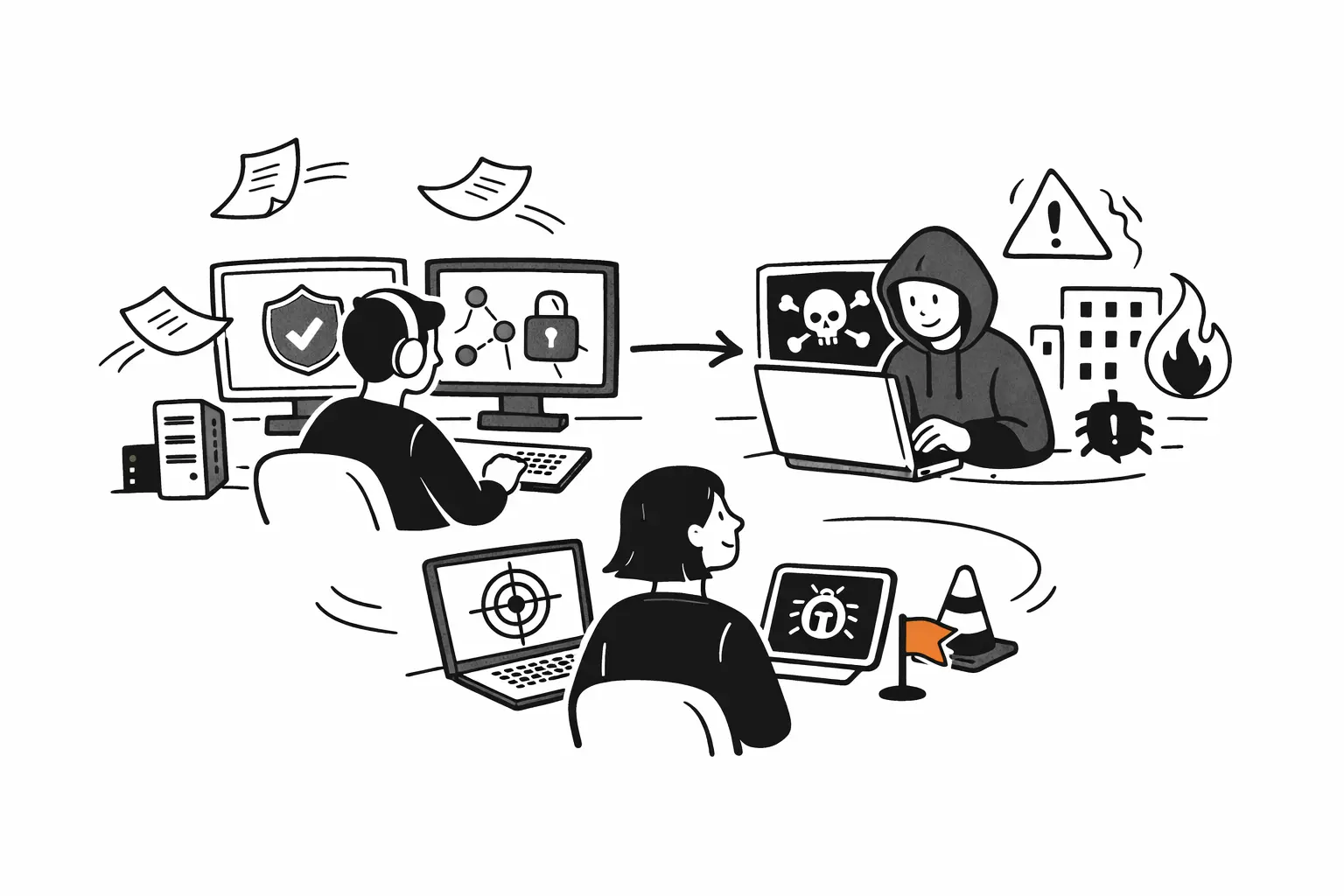
In aviation, pilots train in simulators long before they fly real aircraft.
In healthcare, surgeons practice complex procedures in controlled environments before operating on patients.
Cybersecurity is no different.
Modern cyber threats are too frequent, too fast, and too costly to learn from real incidents alone. This is why cybersecurity simulators have become a critical part of how organisations prepare for attacks.
What is a cybersecurity simulator?
A cybersecurity simulator is a controlled environment that replicates real-world cyber threats without causing real damage.
Instead of reacting to an actual breach, organisations can:
- Practice how attacks unfold
- Test how people and systems respond
- Identify weaknesses safely
- Improve decision-making under pressure
The goal isn’t perfection — it’s preparedness.
Why simulation works in cybersecurity
Cyber incidents rarely fail because of a single technical flaw. They fail because of:
- Human error
- Delayed response
- Unclear responsibilities
- Poor communication
- Gaps between tools and processes
Simulators expose these issues before attackers do, shifting cybersecurity from a reactive discipline to a proactive one.
Common types of cybersecurity simulators
Phishing simulators
Phishing simulators test how employees respond to realistic phishing emails by tracking actions such as clicks, credential submissions, and reporting behaviour.
They help organisations understand human risk and improve security awareness over time — without putting real systems or data at risk.
Incident response simulations
Often run as tabletop or live exercises, these simulations recreate scenarios such as:
- Ransomware attacks
- Data breaches
- Account compromise
- Critical service outages
Teams practice containment, escalation, communication, and recovery in a safe environment, revealing gaps that only appear under pressure.
Attack surface and exposure simulations
These simulate how attackers see an organisation from the outside by:
- Mapping public-facing assets
- Identifying exposed services and misconfigurations
- Highlighting likely entry points
This helps security teams prioritise remediation based on real-world exposure rather than assumptions.
Cyber ranges and technical simulations
More advanced environments designed for security engineers and SOC teams, where defenders can:
- Respond to live attack scenarios
- Test detection and response tooling
- Practice against realistic adversary techniques
These simulations build technical confidence and operational maturity.
From theory to muscle memory
Policies, documentation, and awareness training are important — but they don’t create instinct.
Simulation does.
When teams experience realistic scenarios:
- Responses become faster
- Communication improves
- Roles become clearer
- Mistakes turn into learning moments
Over time, security stops being theoretical and becomes operational.
Reducing risk without real consequences
One of the biggest advantages of cybersecurity simulators is safe failure.
People can make mistakes, ask questions, and learn what went wrong — without downtime, reputational damage, or data loss. This encourages improvement instead of blame, which is essential for long-term security maturity.
Continuous simulation, not one-time testing
Cyber threats evolve constantly. A simulator used once a year quickly becomes outdated.
Resilient organisations treat simulation as an ongoing process, combining:
- Regular human-focused simulations
- Periodic incident response exercises
- Continuous visibility into external exposure
This ensures preparedness keeps pace with real-world risk.
Final thoughts
Cybersecurity simulators exist for the same reason flight simulators do:
the cost of learning during a real incident is too high.
By simulating attacks before they happen, organisations turn uncertainty into insight — and risk into something they can actively manage.
In cybersecurity, the question isn’t if something will go wrong.
It’s whether you’ve practiced for it.