How to Choose a Website Firewall Provider for an Ecommerce Site
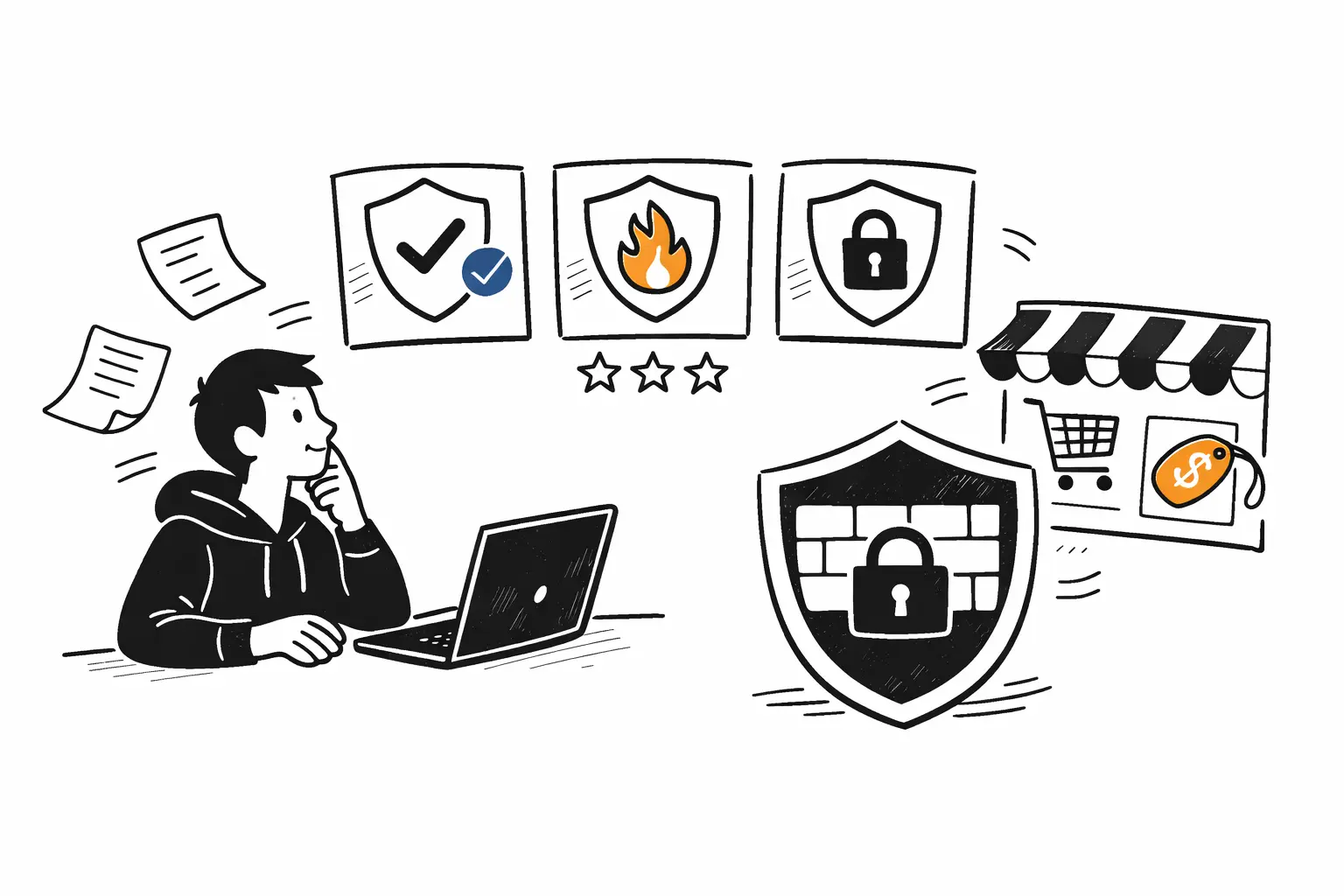
Ecommerce websites are prime targets for cyberattacks. They process payments, store personal data, and rely on constant uptime to generate revenue. As attack techniques become more automated and sophisticated, relying solely on basic hosting security or a generic CDN is no longer enough.
A website firewall — often referred to as a Web Application Firewall (WAF) — is one of the most critical security controls for ecommerce platforms. But choosing the right firewall provider isn’t about ticking boxes or buying the most popular brand. It requires understanding how ecommerce systems are attacked, what traffic patterns look like, and how security controls affect performance and customer experience.
This guide explains how to evaluate website firewall providers specifically for ecommerce environments, without vendor bias or product promotion.
Why Ecommerce Sites Require Specialized Firewall Protection
Unlike brochure-style websites, ecommerce platforms expose complex application logic to the public internet. Every checkout request, API call, product search, and login attempt creates an opportunity for abuse.
Common ecommerce attack vectors include:
- Credential stuffing attacks using leaked username/password combinations
- Card testing attacks that validate stolen credit card details
- SQL injection and cross-site scripting (XSS) through search fields and forms
- Bot-driven scraping of pricing, inventory, and customer data
- Layer 7 DDoS attacks targeting checkout or cart functionality
A firewall for ecommerce must handle legitimate high-volume traffic while identifying subtle malicious behavior — something generic “block everything suspicious” approaches often fail to do.
Understand the Difference Between Network Firewalls and Web Application Firewalls
One of the most common mistakes businesses make is assuming all firewalls provide the same protection.
Network firewalls operate at lower layers of the OSI model. They:
- Filter traffic based on IPs, ports, and protocols
- Protect infrastructure, not application logic
- Are blind to malicious payloads inside HTTP requests
Web Application Firewalls (WAFs) inspect:
- HTTP and HTTPS requests
- Cookies, headers, and parameters
- Application-specific behavior
For ecommerce platforms, only a WAF can detect attacks hidden inside normal-looking web traffic. Any provider being considered should offer a true application-layer firewall — not just IP blocking or rate limiting.
Evaluate How the Firewall Handles Bots (Not Just “Bad Traffic”)
Bots account for a significant portion of ecommerce traffic, and not all bots are malicious. Search engine crawlers, uptime monitors, and partner integrations must remain functional.
Key bot-related capabilities to look for:
- Behavioral analysis instead of static signatures
- Differentiation between human users, good bots, and bad bots
- Protection against headless browsers and automation frameworks
- Adaptive challenges that don’t break checkout flows
Overly aggressive bot blocking can reduce conversion rates, while weak bot detection leads to fraud and infrastructure strain.
Performance Impact Matters More Than Feature Lists
Security controls that slow down checkout pages directly affect revenue. Even a few hundred milliseconds of added latency can lead to abandoned carts.
When assessing firewall providers, consider:
- Where inspection occurs (edge vs origin)
- Whether TLS termination happens close to users
- Impact on dynamic content and APIs
- Ability to cache safely without exposing sensitive data
A firewall should protect the site without becoming a performance bottleneck — especially during peak shopping periods.
Look for Custom Rule Capabilities, Not Just “Managed Protection”
Many providers advertise “fully managed” firewalls, but this often means:
- Generic rule sets
- Limited visibility into what’s being blocked
- Little flexibility for business-specific logic
Ecommerce platforms often require:
- Custom rules for checkout endpoints
- API-specific protections
- Temporary allowances during promotions or integrations
The ability to fine-tune rules — or work with security teams who understand ecommerce logic — is far more valuable than black-box protection.
False Positives Can Be More Dangerous Than Missed Attacks
Blocking legitimate customers during checkout is worse than allowing a low-risk scan attempt.
A firewall provider should demonstrate:
- Transparent logging and alerting
- Easy rule tuning
- Clear explanations of why requests were blocked
- Gradual enforcement modes (monitor → alert → block)
Ask how providers handle false positives during high-traffic events like sales or launches.
Integration with Existing Ecommerce Infrastructure
Ecommerce environments are rarely standalone. They include:
- Payment gateways
- Fraud detection services
- Inventory systems
- Marketing and analytics tools
A firewall must integrate cleanly without breaking workflows. Key considerations include:
- Compatibility with popular ecommerce platforms
- API protection support
- Ability to whitelist trusted third-party services
Poor integration often leads to security gaps or operational friction.
Compliance Support Without Compliance Theatre
Many ecommerce businesses operate under regulatory requirements such as PCI DSS or GDPR. While a firewall alone doesn’t ensure compliance, it should support it.
Look for providers that:
- Support secure logging and audit trails
- Offer controls aligned with compliance frameworks
- Avoid vague “compliance-ready” claims
Security controls should be meaningful, not checkbox-driven.
Visibility and Reporting for Business Stakeholders
Security data shouldn’t only be understandable by engineers.
Useful reporting includes:
- Attack trends over time
- Types of threats blocked
- Traffic anomalies
- Business impact insights
Clear reporting helps security teams justify decisions and helps leadership understand risk without unnecessary technical depth.
Cost Transparency and Scalability
Firewall pricing models vary widely. Some charge based on:
- Traffic volume
- Number of protected domains
- Feature tiers
- Incident response usage
For ecommerce sites with seasonal spikes, unpredictable pricing can be a risk. Providers should offer clear explanations of how costs scale during high-traffic periods.
Final Thoughts: Choosing for Fit, Not Popularity
The right website firewall provider for an ecommerce site isn’t the one with the longest feature list or the loudest marketing. It’s the one that understands ecommerce behavior, protects application logic without disrupting customers, and adapts as threats evolve.
Firewall decisions should be driven by:
- Real attack patterns
- Performance requirements
- Operational flexibility
- Long-term scalability
When evaluated properly, a website firewall becomes an enabler of growth — not just another security expense.