What Cybersecurity Training Platforms Are Recommended for Employees?
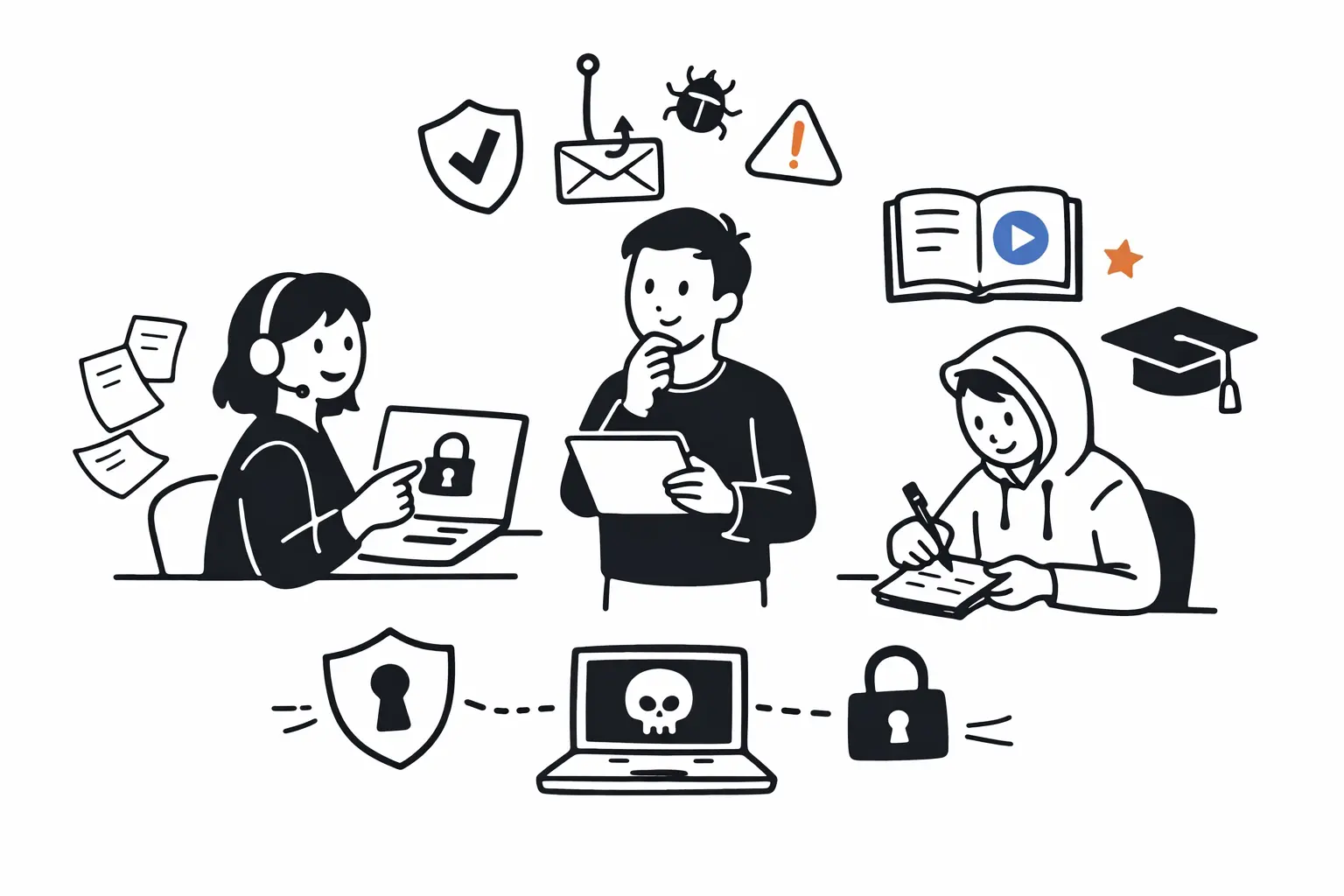
Human error remains one of the leading causes of security incidents. Phishing clicks, weak passwords, reused credentials, and poor data handling habits routinely bypass even well-designed technical controls.
That's why employee cybersecurity training has become a core security control, not just a compliance exercise.
However, not all training platforms are effective. Some overwhelm employees with technical jargon. Others reduce security to box-ticking activities that satisfy audits but fail to change real-world behaviour.
This article explores what makes a cybersecurity training platform genuinely effective, provides real-world examples, and explains how organisations can choose platforms that actually reduce risk.
Why Employee Cybersecurity Training Matters
Most successful cyber attacks do not begin with advanced exploits or zero-day vulnerabilities. They begin with people.
Attackers frequently rely on:
- phishing emails impersonating trusted brands or internal staff
- credential harvesting through fake login portals
- social engineering via phone calls, messaging apps, or SMS
- misuse of legitimate access after initial compromise
According to Verizon's Data Breach Investigations Report, human involvement plays a role in over 70% of breaches. https://www.verizon.com/business/resources/reports/dbir/
No firewall, endpoint agent, or cloud security tool can fully protect an organisation without informed human behaviour.
Effective training helps employees:
- recognise suspicious activity
- slow down during high-pressure requests
- report incidents early instead of ignoring them
- avoid insecure shortcuts attackers exploit
In practice, this often determines whether an incident becomes a contained alert or a full-scale breach.
What Makes a Good Cybersecurity Training Platform?
Before comparing platforms, it's important to understand what actually works in real organisations.
Role-Relevant Content
Generic, one-size-fits-all training is one of the most common reasons programs fail.
Effective platforms tailor content based on:
- job function
- access level
- technical proficiency
- exposure to sensitive data
For example:
- Finance teams are frequently targeted by invoice fraud and CEO impersonation attacks
- Developers face risks around exposed secrets, insecure dependencies, and misconfigured cloud services
- Sales and marketing teams often use multiple SaaS platforms and are targeted with credential-harvesting campaigns
Role-based training significantly improves engagement and retention. This approach is widely recommended by the SANS Institute. https://www.sans.org/security-awareness-training/
Short, Continuous Learning (Not Annual Events)
Annual security awareness sessions are widely recognised as ineffective.
Strong platforms focus on:
- microlearning modules (5-10 minutes)
- frequent refreshers aligned to emerging threats
- scenario-based lessons that mirror real attacks
For example, instead of a yearly phishing presentation, employees might receive:
- monthly simulated phishing emails
- short follow-up videos explaining real examples
- reminders tied to current attack campaigns
NIST explicitly recommends continuous security awareness over periodic training. https://csrc.nist.gov/publications/detail/sp/800-50/final
Behaviour Measurement and Metrics
The best platforms do not just deliver content - they measure behaviour change.
Common metrics include:
- phishing simulation click rates
- reporting rates for suspicious emails
- repeat offender tracking
- improvement trends over time
For example, an organisation may track a reduction in phishing click rates from 18% to 4% over six months, demonstrating tangible risk reduction.
This data is critical when reporting to leadership, auditors, or regulators.
Common Types of Cybersecurity Training Platforms
Security Awareness Training Platforms
These platforms focus on everyday threats employees face.
They typically include:
- simulated phishing campaigns
- short video-based lessons
- policy and compliance tracking
- automated reminders and reporting
Real-world examples include:
- KnowBe4 - widely used for phishing simulations and awareness campaigns https://www.knowbe4.com
- Proofpoint Security Awareness - strong phishing and email threat focus https://www.proofpoint.com
These platforms are popular because phishing remains the most common initial attack vector.
Technical Training Platforms
Designed for IT, engineering, and security teams rather than general staff.
They commonly cover:
- secure development practices
- cloud security fundamentals
- identity and access management
- incident response basics
Examples include:
- Immersive Labs - hands-on cyber skill development https://www.immersivelabs.com
- Pluralsight - secure coding and cloud security modules https://www.pluralsight.com
These platforms are most effective when combined with awareness training, not used as a replacement.
Compliance-Oriented Training Platforms
These platforms are often driven by regulatory requirements such as:
- ISO 27001
- SOC 2
- GDPR
- Cyber Essentials
They focus on:
- policy acknowledgement
- audit evidence
- training completion records
While compliance training is necessary, it should never replace scenario-based awareness training. Organisations that rely solely on compliance platforms often struggle with real-world incidents.
How to Choose the Right Platform
When evaluating cybersecurity training platforms, organisations should ask:
- Is the content engaging or purely informational?
- Can training be adapted to different roles and risk profiles?
- Does the platform provide measurable outcomes?
- Are phishing simulations realistic and regularly updated?
- Does reporting align with regulatory and leadership needs?
Cost is important, but effectiveness matters more. A cheaper platform that employees ignore offers little protection.
Common Pitfalls to Avoid
Organisations frequently undermine training efforts by:
- treating training as a one-time annual event
- overwhelming employees with technical detail
- failing to reinforce lessons through testing
- ignoring employee feedback on content relevance
- focusing only on completion rates instead of behaviour change
Security awareness succeeds when it respects employees' time and intelligence.
Final Thoughts
Cybersecurity training platforms are not about turning employees into security experts. They are about reducing organisational risk by changing everyday behaviour.
The most effective platforms:
- respect employees' time
- focus on realistic threats
- measure outcomes, not attendance
- continuously adapt as attacks evolve
When done properly, training becomes a living security control, reinforcing technical defences rather than compensating for their limits.
Well-trained employees don't replace security tools - they make them work.